In Focus April-May 2026
Bridging Industry and Academia
What's in focus Introduction
Bridging Industry and Academia
Since January 2021, Karolina Smeds, principal scientist at ORCA Labs, has had an affiliation as an Honorary Assistant Professor at the School of Medicine at the University of Nottingham.
The work has been carried out together with the Hearing Sciences group, mainly with the Scottish section, located in Glasgow and under the leadership of Professor Graham Naylor.
Below, Karolina gives some reflections on her time as an academic researcher.
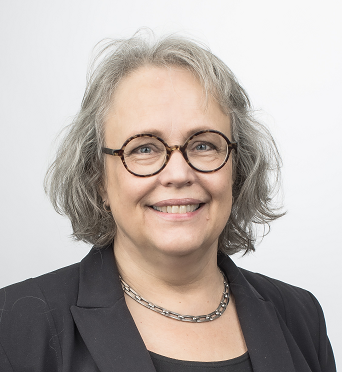
Karolina Smeds University affiliation
Role and Collaboration Value
For the past five years, I have been affiliated with the University of Nottingham through a formal collaboration with WS Audiology.
My work with the university focuses mainly on research collaborations in areas relevant to WS Audiology.
Alongside this, I contribute to teaching by lecturing medical students on hearing aids and supervising student research projects closely connected to our research activities.
Collaborating with universities generally brings benefits to WS Audiology.
Many colleagues at ORCA Labs are actively engaged in academic partnerships in areas such as group conversations, emotional responses to sound, communication strategies, and the development of outcome measures.
These collaborations allow us to shape research in areas that are central to our mission while working closely with researchers who bring complementary expertise.
They expand our research network, spark new ideas, and ensure that complex research topics are supported by a critical mass of engaged researchers, making long-term progress possible and impactful.
“These collaborations expand our network, spark new ideas, and enable long-term progress in complex research areas.”
Explore Affiliations
On-Site & University Benefits
A formal university affiliation adds even further value. Regular on-site visits help build strong relationships with the wider research group and provide opportunities to engage with a broader range of research activities – not only those we are directly involved in.
This encourages productive cross-project collaboration and strengthens teamwork.
Being physically present at the university accelerates progress and ensures a continuous link between academic research and real-world industry challenges.
The university also benefits from this type of collaboration. It helps ensure that research has practical, real-world impact, opens funding opportunities, and gives PhD students and junior researchers firsthand insight into industrial research.
Company visits and close interaction with industry researchers allow young scientists to better understand career paths beyond academia, while giving WS Audiology the opportunity to connect with and inspire future talent.
" The affiliation has allowed me to contribute to academic research with a strong link to real-world industry challenges."

Explore Collaboration
Specific Collaboration Projects
Our collaboration with the University of Nottingham began with a PhD project focused on small-group conversations -an area of growing importance for understanding real-life hearing challenges.
While WS Audiology was already developing outcome measures in this field, the Glasgow research group brought deep expertise in conversation research.
Together, the research projects demonstrate how long-term industry and academic collaboration drives innovation, strengthens research quality, and brings hearing research closer to everyday life.
Specific Collaboration Projects Dr Raluca Nicoras
Small-Group Conversations Research
Dr Raluca Nicoras successfully completed her PhD in 2024, exploring what people with and without hearing loss consider a successful conversation .
Her work combined self-ratings, observations, and behavioural data to identify indicators of success in small groups.
Close collaboration between research teams in Glasgow, Lynge, and Stockholm helped address shared methodological challenges and improved the quality of research across all sites.
Raluca now continues this research as a postdoctoral researcher, sponsored by WS Audiology.
Her current work looks beyond conversation alone, investigating how people manage conversations while performing other everyday activities.
This research is informing new experiments that reflect real‑world communication demands
Specific Collaboration Projects PhD Student Lindsey Steele
Social Participation Research
Building on our conversation research, we expanded the collaboration to focus on social participation, a broader goal of effective communication.
Lindsey Steele’s PhD addresses a key gap in the field by developing a clear working definition of social participation.
Her research combines ecological momentary assessments (EMAs) and social network analysis to study how people with and without hearing loss engage in social life.
In the final phase of her PhD, she will examine how social participation changes after hearing aid provision.
Specific Collaboration Projects Dr William Whitmer and David McShefferty
Just Follow Conversation
In parallel, we collaborated on evaluating the Just Follow Conversation (JFC) outcome measure, commonly used to assess speech understanding.
Working with Dr William Whitmer and David McShefferty, we conducted a large‑scale evaluation showing that JFC is a fast and reliable subjective measure of speech understanding, while also highlighting its limitations in detecting benefits from amplification .
References
References
- Nicoras R, Gotowiec S, Hadley LV, Smeds K, Naylor G. Conversation success in one-to-one and group conversation: a group concept mapping study of adults with normal and impaired hearing. International Journal of Audiology. 2022:1-9.
- Nicoras R, Buck B, Fischer R-L, Godfrey M, Hadley LV, Smeds K, et al. Effective Design for Experiments on Small-Group Conversation: Insights From an Example Study. American Journal of Audiology. 2025;34(2):305-20.
- Nicoras R, Fischer R-L, Naylor G, Smeds K, Hadley LV. Self-reported conversation success in groups involving adults with normal and impaired hearing. International Journal of Audiology. 2025:1-12.
- Whitmer WM, McShefferty D, Smeds K. The just-follow conversation test: a quick, reproducible measure of subjective intelligibility that is not sensitive to amplification. International Journal of Audiology. 2025:1-16.